
Alguns poemas enigmas e contos de Lewis Carrol (Procurando traduzir...)

Em algumas publicações anteriores deste blog (A propósito de traduções... A Bíblia e "O corvo" de Edgar Allan Poe e O trilho do bezerro... (Sam Walter Foss -1858-1911) ) abordei o tema das traduções.
Não sendo eu fluente na língua inglesa, gosto deste tipo de desafio, de transpor poemas da língua de Shakespeare e Jack-the-Ripper, para a língua de Camões e Jorge Jesus.
Desta vez as vítimas foram textos de Lewis Carrol, aliás Charles Lutwidge Dodgson (1832 – 1898), mais conhecido pelos seus contos de Alice, sobretudo o conto que decorre num país que não é o nosso (*).
Como no Trilho do bezerro, estes devaneios não se poderão chamar exatamente traduções. Será talvez mais correto chamar-lhes transposições. Procurei manter a essência do significado, mas sobretudo a musicalidade focada na rima.
Quaisquer sugestões são bem-vindas, mesmo que não vindas de gente-bem, nem chamada Benvinda!
* Se bem que no início possamos colocar essa hipótese quando Alice entra num buraco
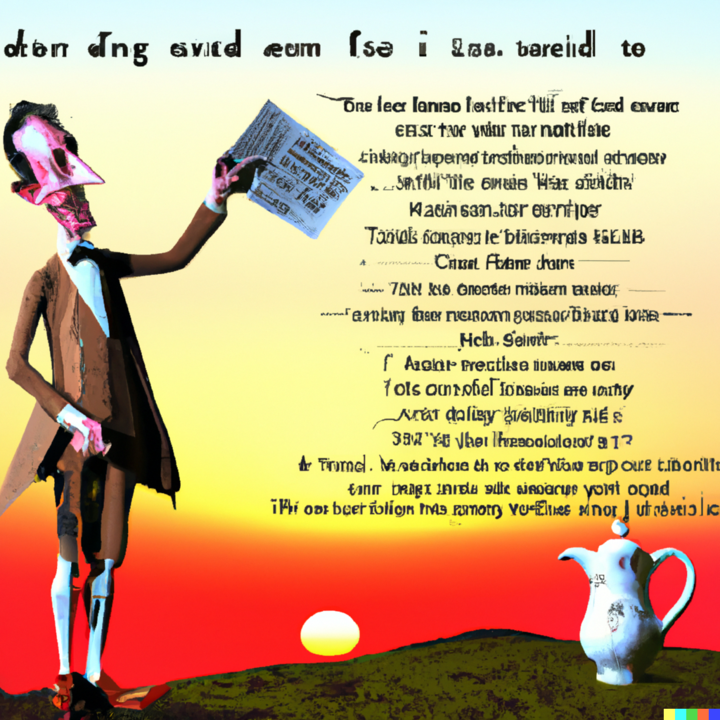
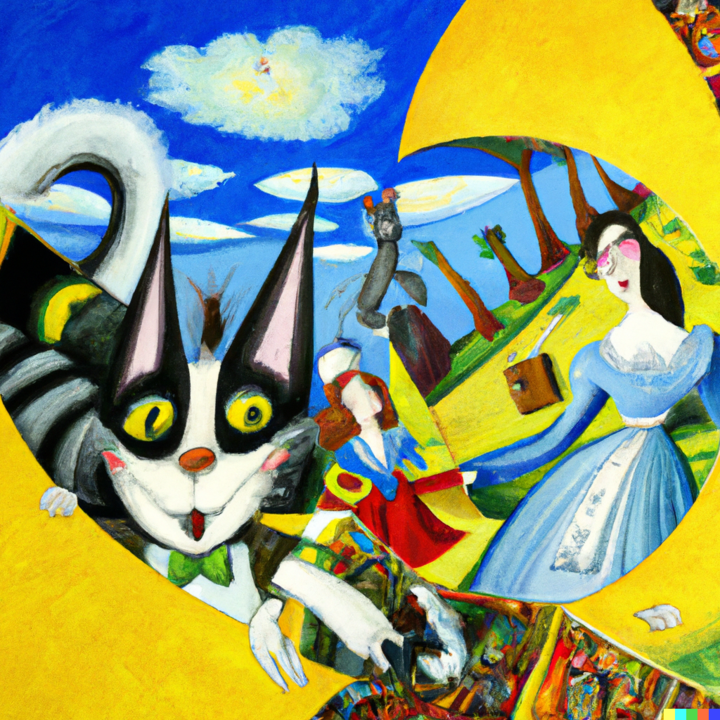
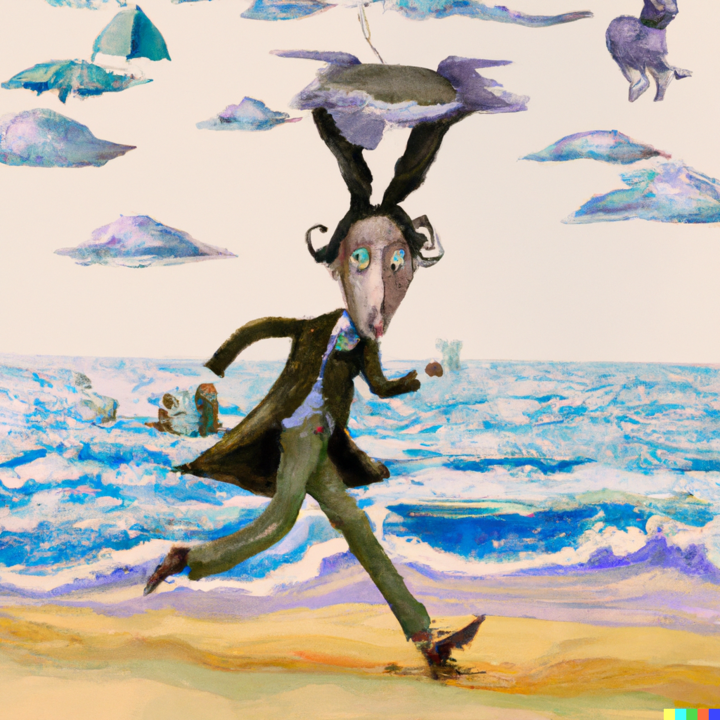
As imagens foram geradas pela aplicação: https://labs.openai.com/
_o0o_

|
FACTS Were I to take an iron gun, And fire it off towards the sun; I grant twould reach its mark at last, But not till many years had passed. But should that bullet change its force, And to the planets take its course, Twould never reach the nearest star, Because it is so very far. |
Factos Se num potente canhão eu pegar, e contra o sol o disparar; Decerto que um dia o atingirá, mas muitos anos demorará. Mas se dermos mais força à bala, e em direção aos astros formos apontá-la, Não chegará na nossa vida à mais próxima estrela, Estamos ultra longe dela. |

|
My Fairy I have a fairy by my side Which says I must not sleep, When once in pain I loudly cried It said ‘You must not weep.’
If, full of mirth, I smile and grin, It says ‘You must not laugh.’ When once I wished to drink some gin, It said ‘You must not quaff’.
When once a meal I wished to taste It said ‘You must not bite’ When to the wars I went in haste It said ‘You must not fight’.
‘What may I do?’ at length I cried, Tired of the painful task. The fairy quietly replied, And said ‘You must not ask’.
Moral: ‘You mustn't.’ |
A minha fada Tenho uma fada a meu lado Que me diz para não dormir Certo dia sofrido gritei assustado Disse ‘não te deves afligir’
Se alegre, dou gargalhadas Diz-me ‘Não te deves rir’ Quis gin beber umas goladas Disse-me ‘não deves engolir’
Quis provar uma refeição Disse-me ‘não deves morder’ Para a guerra fui num batalhão Disse-me ‘não deves combater’
‘Que faço então?’ Gritei no fim, Farto de ser constrangido A fada respondeu-me assim, ‘Perguntar é proibido!’
Moral: ‘Nunca se deve!’ |

|
Melodies I There was an old farmer of Readall, Who made holes in his face with a needle, Then went far deeper in Than to pierce through the skin, And yet strange to say he was made beadle.
II There was an eccentric old drapper, Who wore a hat made of brown paper, It went up to a point, Yet it looked out of joint, The cause of which he said was ‘vapour’.
III There was once a young man of Oporta, Who daily got shorter and shorter, The reason he said Was the hod on his head, Which was filled with the heaviest mortar.
IV His sister, named Lucy O'Finner, Grew constantly thinner and thinner; The reason was plain, She slept out in the rain, And was never allowed any dinner. |
Melodias I Era um velho agricultor de Olhão Furava o rosto com uma agulha na mão Depois foi ainda mais além Perfurou toda a pele também Por estranho que pareça chegou a ser sacristão
II Era um velho excêntrico sedutor, Que usava chapéu de papel de cor Usou-o até dada altura, Mas perdeu a compostura, Disse que a culpa era do ‘calor’.
III É um jovem de Alcobaça Fica mais baixo cada dia que passa A razão, disse sem pressa Trago um tabuleiro à cabeça Cheio de pesada argamassa
IV A sua irmã Lúcia Guiomar Cada vez mais magra estava a ficar A razão aqui comento: Dormia à chuva ao relento E nunca lhe davam jantar
|

|
Brother and Sister
‘SISTER, sister, go to bed! Go and rest your weary head.’ Thus the prudent brother said.
‘Do you want a battered hide, Or scratches to your face applied?’ Thus his sister calm replied.
‘Sister, do not raise my wrath. I'd make you into mutton broth As easily as kill a moth’
The sister raised her beaming eye And looked on him indignantly And sternly answered, ‘Only try!’
Off to the cook he quickly ran. ‘Dear Cook, please lend a frying-pan To me as quickly as you can.’
‘And wherefore should I lend it you?’ ‘The reason, Cook, is plain to view. I wish to make an Irish stew.’
‘What meat is in that stew to go?’ ‘My sister'll be the contents!’ ‘Oh’ ‘You'll lend the pan to me, Cook?’ ‘No!’
Moral: Never stew your sister. |
Irmão e Irmã
‘Mana, mana, não fiques doente Deita-te e descansa a cabeça dormente’ Tal lhe disse seu irmão prudente
‘Queres levar uma carga de pancada? Te arranhe a cara à unhada?’ Respondeu a irmã recostada
‘Irmã, não me armes conflito Senão faço-te em picadito Fácil como matar um mosquito’
A irmã pôs um olhar audaz Olhou para ele com ar mordaz E severa respondeu: ‘Vê se és capaz!’
Ele correu até à cozinheira ‘Amiga, dá-me uma frigideira Passa-ma rápida e ligeira.’
‘E porque ta devia ceder?’ ‘A razão, é fácil de entender Paelha espanhola vou fazer’
‘Que carne vai pôr no fogão?’ ‘Vou cozinhar a minha irmã!’ ‘Mauzão!’ ‘Então passa-me a sertã?’ ‘Não!’
Moral: Nunca cozinhe a sua irmã |
|
Rules and regulations
A short direction To avoid dejection, By variations In occupations, And prolongation Of relaxation, And combinations Of recreations, And disputation On the state of the nation In adaptation To your station, By invitations To friends and relations, By evitation Of amputation, By permutation In conversation, And deep reflection You'll avoid dejection. |
Regras e regulamentos
Uma breve sugestão Para evitar depressão, Pela variação Na sua ocupação, E extensão Da descontração, Na combinação Da recreação, E discussão Do estado da nação Na adaptação À sua posição, Pela recomendação A amigos e outros da sua relação, Pela evitação Da limitação, Pela interação Em conversação, E profunda reflexão Evitará a depressão. |
|
Learn well your grammar, And never stammer, Write well and neatly, And sing most sweetly, Be enterprising, Love early rising, Go walk of six miles, Have ready quick smiles, With lightsome laughter, Soft flowing after. Drink tea, not coffee; Never eat toffy. Eat bread with butter. Once more, don't stutter. |
Aprende a boa gramática Não gaguejes, ganha prática Escreve bem e claramente E canta o mais docemente Avança, não tenhas medo Levanta-te bem cedo Faz bem longas caminhadas Sê pronto a dar risadas Com um discreto sorrir Fluindo calmo a seguir Bebe chá e não café E nunca fumes rapé Come manteiga no pão E gaguejar na-na-não! |
|
Don't waste your money, Abstain from honey. Shut doors behind you, (Don't slam them, mind you.) Drink beer, not porter. Don't enter the water Till to swim you are able. Sit close to the table. Take care of a candle. Shut a door by the handle, Don't push with your shoulder Until you are older. Lose not a button. Refuse cold mutton. Starve your canaries. Believe in fairies. If you are able, Don't have a stable With any mangers. Be rude to strangers.
Moral: Behave. |
Não desperdices dinheiro Do mel não queiras nem cheiro Fecha as portas ao passar Mas sem força, devagar! Bebe cerveja, não bagaço No rio segue passo a passo Até saberes nadar Junto à mesa te deves sentar Está atento ao professor Fecha a porta pelo puxador Não empurres com o joelho Até chegares a velho Não percas nem um fio Recusa carneiro frio Aos canários pouca alpista Crê em fadas e em fadistas E se fores imbecil, não tenhas um redil Com qualquer rebanho. Sê rude com estranhos.
Moral: Age |
|
Puzzles from wonderland II. A stick I found that weighed two pound; I sawed it up one day In pieces eight of equal weight! How much did each piece weigh? (Everybody says ‘a quarter of a pound’, which is wrong.)
V. Three sisters at breakfast were feeding the cat, The first gave it sole—Puss was grateful for that, The next gave it salmon—which Puss thought a treat, The third gave it herring—which Puss wouldn't eat. (Explain the conduct of the cat)
Solutions to puzzles
II. In Shylock's bargain for flesh was found No mention of the blood that flowed around: So when the stick was sawed in eight, The sawdust lost diminished from the weight.
V. That salmon and sole Puss should think very grand Is no such remarkable thing. For more of these dainties Puss took up her stand; But when the third sister stretched out her fair hand Pray why should Puss swallow her ring?
|
Enigmas do país das maravilhas II. Uma peça de carne com dois quilos pesei Vi-a depois por sinal Em oito pedaços de peso igual Quanto pesava cada um afinal? (Todos dizem um quarto de quilo mas está mal)
V. Três irmãs de manhã dão de comer ao gato, A primeira deu-lhe pargo – O Simba ficou-lhe grato, A segunda deu salmão – Foi o Simba deleitar, A terceira quis dar solha – O Simba foi afugentar. (Explique o comportamento do gato)
Soluções dos enigmas
II Comprada num talho, a peça de carne em saldo Com sangue a escorrer em espesso caldo Por isso quando ela em oito partes foi cortada Bem mais leve ficou com a parte desperdiçada
V Que com o pargo e o salmão Simba se deliciaria Não será grande admiração Para guloseimas dessas sempre pronto estaria Mas quando a outra irmã, pancada lhe oferecia, Ele iria aguardar por que razão?
Em inglês herring (her ring) arenque (seu anel); em português adaptei para ‘solha’ (palmada) |
|
A Sea Dirge
There are certain things - as, a spider, a ghost, The income-tax, gout, an umbrella for three That I hate, but the thing that I hate the most Is a thing they call the Sea.
Pour some salt water over the floor - Ugly I'm sure you'll allow it to be: Suppose it extended a mile or more, THAT'S very like the Sea.
Beat a dog till it howls outright - Cruel, but all very well for a spree: Suppose that he did so day and night, THAT would be like the Sea.
I had a vision of nursery-maids; Tens of thousands passed by me - All leading children with wooden spades, And this was by the Sea.
Who invented those spades of wood? Who was it cut them out of the tree? None, I think, but an idiot could - Or one that loved the Sea.
It is pleasant and dreamy, no doubt, to float With 'thoughts as boundless, and souls as free': But, suppose you are very unwell in the boat, How do you like the Sea?
There is an insect that people avoid (Whence is derived the verb 'to flee'). Where have you been by it most annoyed? In lodgings by the Sea.
If you like your coffee with sand for dregs, A decided hint of salt in your tea, And a fishy taste in the very eggs - By all means choose the Sea.
And if, with these dainties to drink and eat, You prefer not a vestige of grass or tree, And a chronic state of wet in your feet, Then - I recommend the Sea.
For I have friends who dwell by the coast - Pleasant friends they are to me! It is when I am with them I wonder most That anyone likes the Sea.
They take me a walk: though tired and stiff, To climb the heights I madly agree; And, after a tumble or so from the cliff, They kindly suggest the Sea.
I try the rocks, and I think it cool That they laugh with such an excess of glee, As I heavily slip into every pool That skirts the cold cold Sea |
Um canto fúnebre ao mar
Há certas coisas, fantasma, aranha Impostos, guarda-chuva a por três partilhar Que detesto, mas o que mais me estranha É uma coisa a que chamam mar
Deita no chão água salgada Fica sujo, mas deixa assim ficar: Supõe-na por mais de uma milha espraiada E tens algo muito igual ao mar
Bate num cão até não parar de ganir É cruel, mas estamos só a brincar Supõe-no assim, noite e dia a seguir Isso soará como o mar
Tive uma visão com amas à maneira Dezenas de milhar por mim a passar Todas com crianças com pás de madeira E isto era junto ao mar
Quem inventou em madeira essas pás? Quem das árvores as decidiu cortar? Só um idiota de tal seria capaz Ou alguém que goste de mar
É agradável flutuar eu concedo Alma livre sem limites no pensar Mas supõem que em barcos sentes medo, Poderás tu gostar de mar?
Há um inseto por todos evitado O nome com a palavra 'tosca' vai rimar Em que locais por ele és mais incomodado? Em locais ao pé do mar
Se gostas de beber café com areia, No chá um travo de sal no paladar, E um sabor a peixe na geleia Não podes deixar de ir ver o mar
E se com delícias para comer e beber, Não quiseres erva ou árvore vislumbrar, Nos pés sentir humidade permanente, Então recomendo-te o mar
Tenho amigos que passeiam na costa Bons amigos – gosto de com eles estar Quando lhes pergunto, espanta-me a resposta Como podem gostar do mar!?
Comigo em passeio, com ar algo azedo Subimos uns montes, eu estava a adorar; Após tropeçarem num simples rochedo Amáveis sugerem passear no mar
Passo pelas rochas e até acho um regalo Mas riem-se de mim gozando até fartar Quando para as poças de água resvalo As poças da água gelada do mar |


Comentários
Enviar um comentário